Role

Product Design Lead · UI/UX · Branding

Product Design Lead · UI/UX · Branding

Industry

Industry

Sustainability

Sustainability

Timeline

September 2025

September 2025

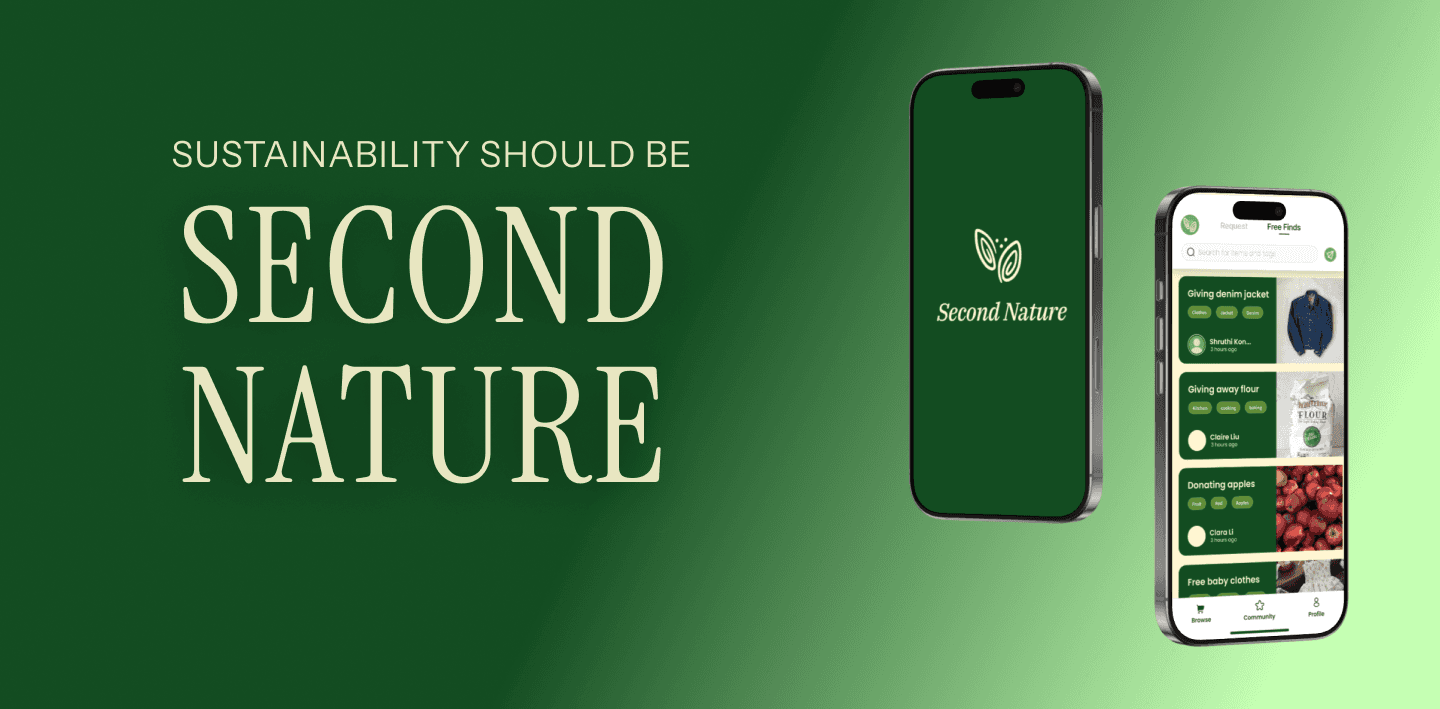
Second Nature is a thrift store reimagined as a community platform, blending local exchange with accountability and gamification.

The Problem

Sustainable consumption practices are widely encouraged, yet secondhand and shared-use behaviors face major adoption barriers, including:

Social stigma around using secondhand goods
Lack of trust between strangers
Transaction-heavy resale platforms prioritizing profit
Cluttered, uninspiring marketplace experiences

As a result, sustainability often feels inconvenient, transactional, or socially uncomfortable.

Research

~60%

of owned items are unused in a single household


$2T

worth of underused goods
sit idle globally


50%+

peer to peer marketplace users reported unreliable transactions


reported unreliable marketplace transactions


Through competitive analysis and problem exploration, we identified that existing marketplaces:

Treat exchanges as one-off transactions rather than relationships
Offer little incentive for generosity or long-term engagement
Rely on price-driven motivation instead of community trust
Lack mechanisms to prevent freeloading while remaining inclusive

This revealed an opportunity to design for behavior change, not just resale.

Key Insight: People are more willing to share and reuse when they feel part of a trusted

community and when their actions are recognized, not monetized.

The Solution

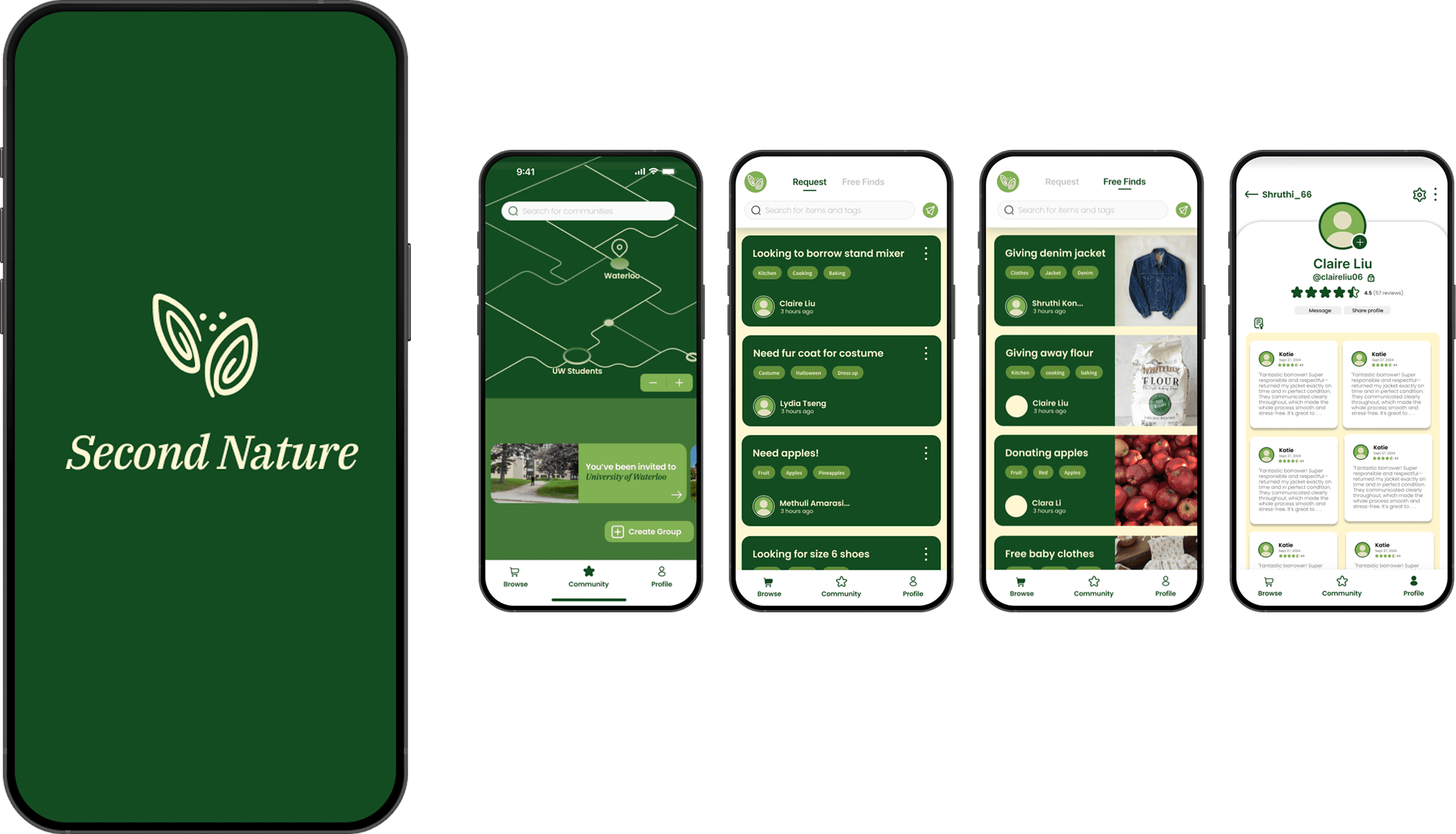
Second Nature reimagines the thrift marketplace as a community-first ecosystem.
Transaction
Partnership
Divided
Familiar
Profit
Sustainability
Dull
Vibrant

Core Features

Community-Based Groups

  • Users join location-specific communities (e.g. university campuses)
  • Increases trust, relevance, and repeated interaction
  • Reinforces a sense of shared responsibility

Learnings & Looking Ahead

Second Nature began as a question about waste, but quickly evolved into a deeper exploration of how people interact through systems. Rather than focusing on individual responsibility, this project challenged me to design for shared accountability within communities.